The question
Gaming is common among young people and the public debate is loud. I wanted to see what the survey data says about hours played and wellbeing.
What I did
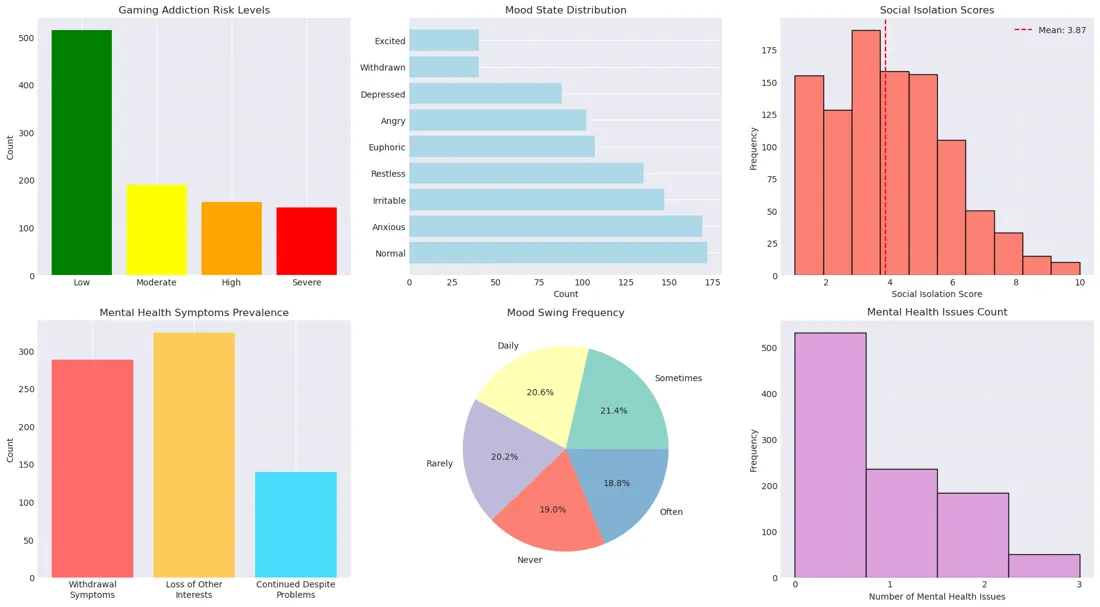
Handled missing values in grades (24.6%) and work productivity (32.6%) and checked outliers with the IQR rule.
Engineered seven features, including gaming intensity and a mental-health issue count.
Compared groups with ANOVA and explored sleep, social, physical and performance effects.
Trained a random forest to predict addiction risk level.
What I found
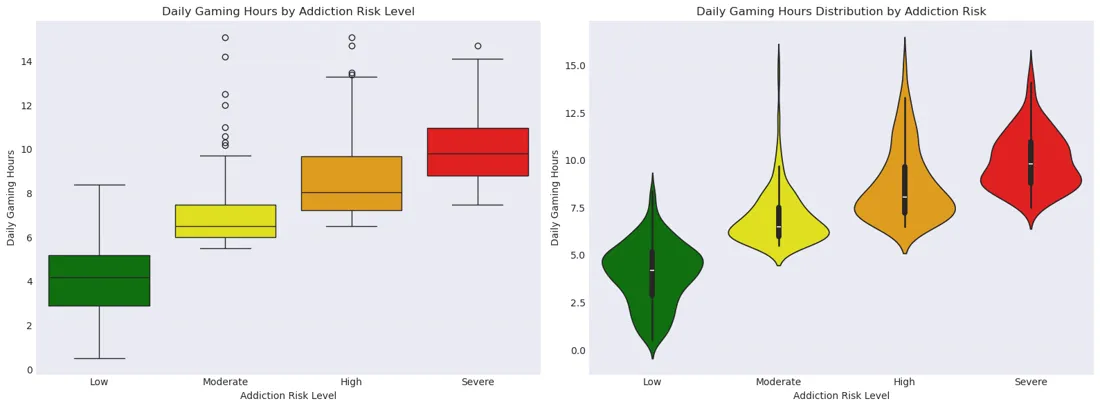
Average daily playtime rises from 4.0 hours in the low-risk group to 10.0 hours in the severe group (ANOVA F = 685, p below 0.001).
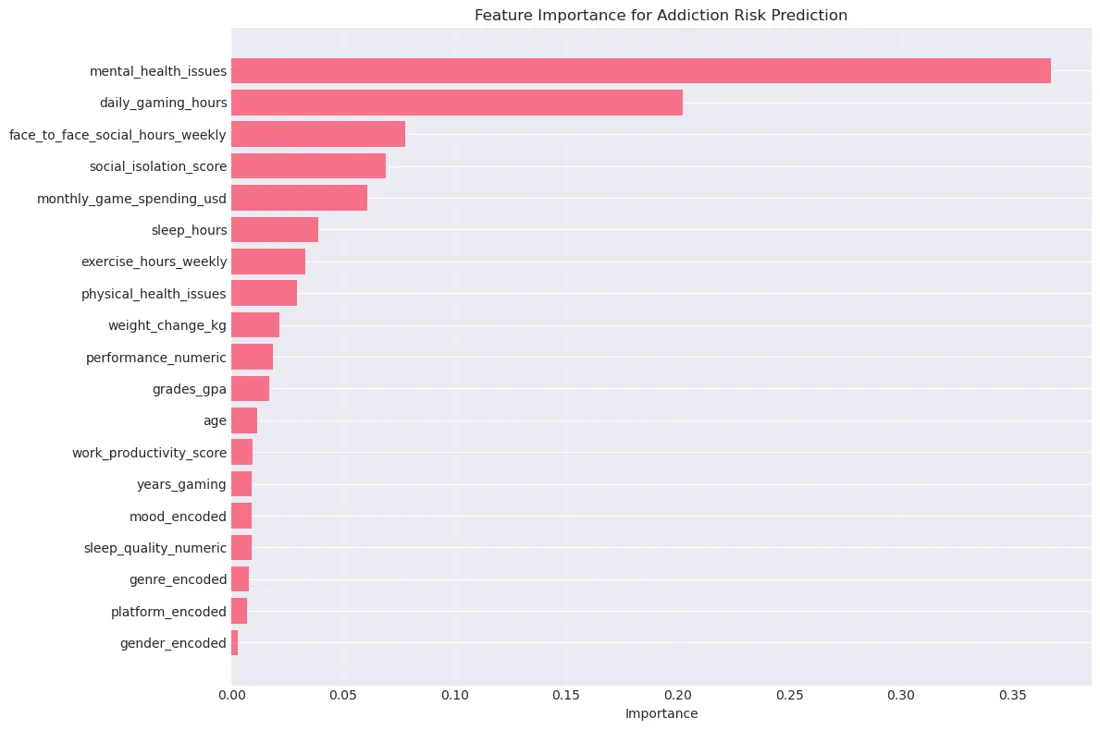
Mental-health issues and daily hours were the top predictors, at 37% and 20% of model importance.
The survey covers ages 13 to 35 with a mean of 20.5, and 65% of respondents are male.
Charts from the analysis
Limits to keep in mind
About the data
The random forest scored 98.5%. An accuracy that high usually means the risk label is built from the same inputs, so I treat the model as a description of the data and not a deployable predictor.