The question
The 2026 tournament was the first to field 48 teams. Critics expected weaker group games and fewer surprises at the top. I wanted to test that with match data instead of opinion.
What I did
Loaded every match, goal, card and squad from an open tournament dataset and patched the final by hand, because the source was pulled before it was played.
Compared 2026 with 2018 and 2022 on goals and cards.
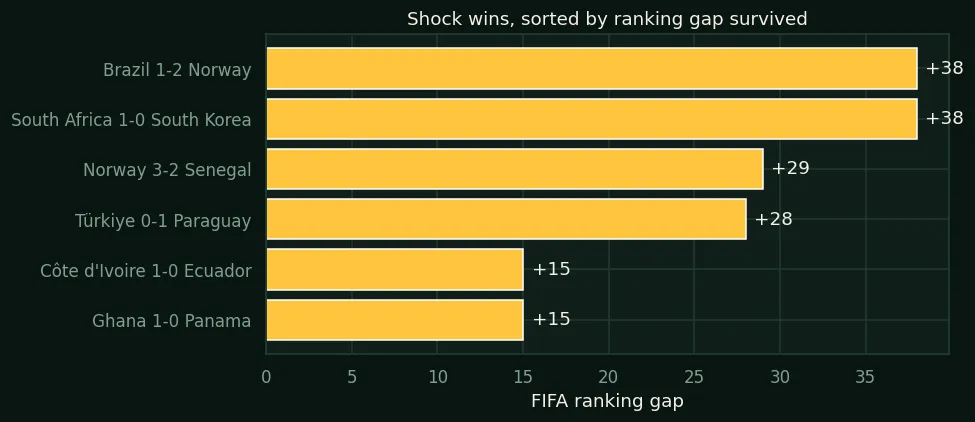
Defined a shock win as a lower-ranked side winning against a gap of 15+ places, and a statement draw as a draw against a gap of 20+.
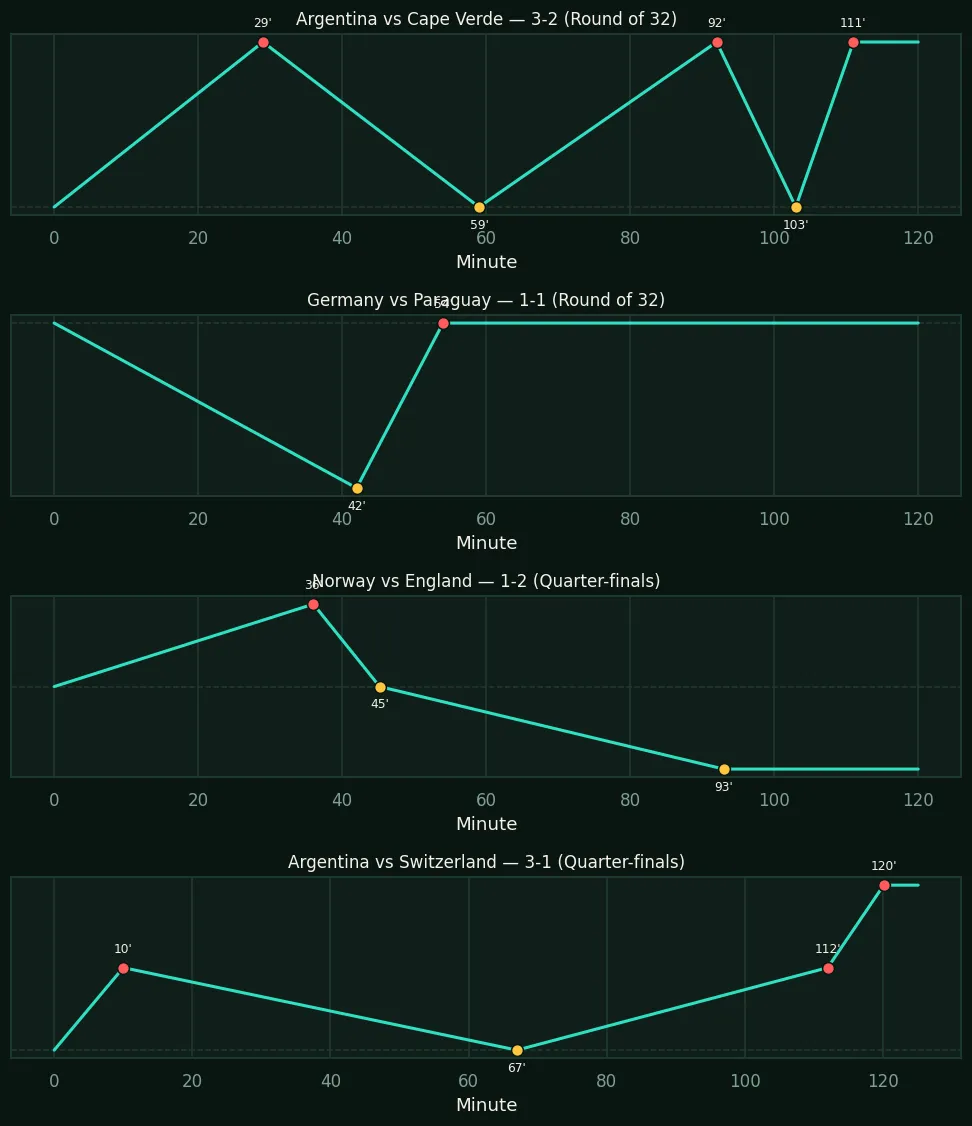
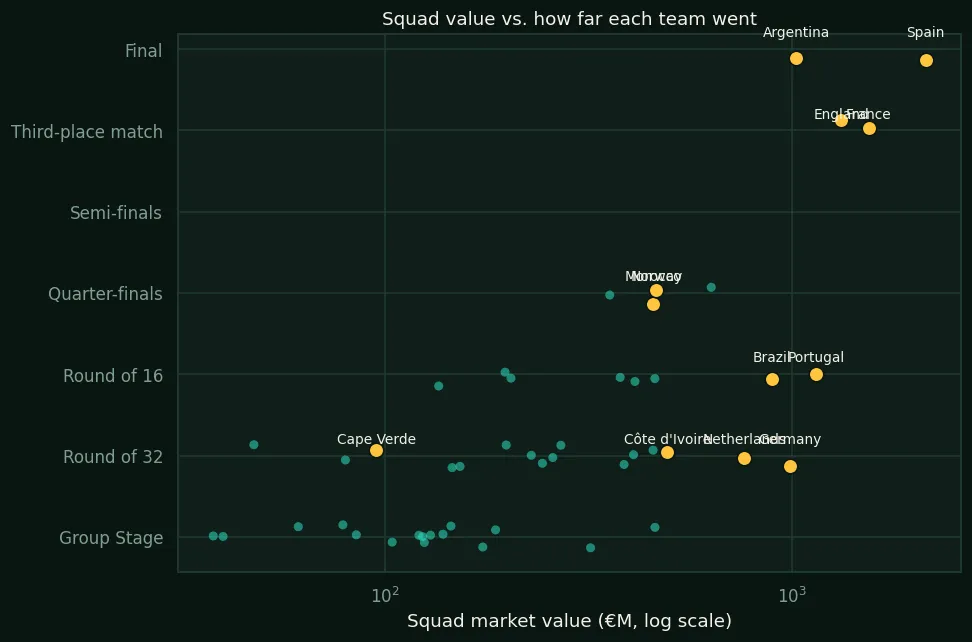
Rebuilt goal-by-goal timelines for knockout games where an underdog pushed a favourite to extra time, then compared squad market value with the round each team reached.
What I found
The expansion did not hurt quality. Goals rose to 2.96 per match, the highest of the three tournaments, and cards fell to 2.52 per match.
Norway beating Brazil 2-1 in the Round of 16 was the biggest knockout shock, with a 38-place ranking gap.
Spain’s 0-0 draw with Cape Verde on matchday one had the largest gap of any statement draw, at 65 places.
Cape Verde pulled level twice against Argentina in the Round of 32 before losing 3-2 in extra time.
Money did not buy results. The Netherlands had the 8th most valuable squad and went out in the same round as Cape Verde.
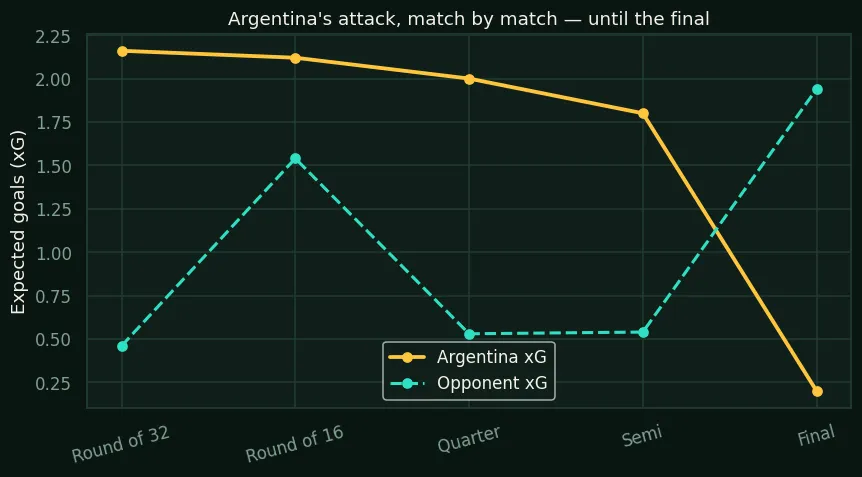
Argentina’s expected goals fell sharply across the knockout rounds and hit a low in the final.
Charts from the analysis
Limits to keep in mind
Real-world data
The ranking gaps use pre-tournament FIFA rankings, so a team that improved during the event still counts as the underdog.